
Implantology
Dental implants replace missing teeth. They restore the functional and aesthetic aspects, giving São Dente Clinic patients the confidence to smile with pride.
I lost a tooth and now what?

The loss of one or more teeth is often accompanied by:
- Decreased self-esteem
- Aged appearance
- Reduced chewing ability
- Changed aesthetics
- Bone resorption
- Changes in the position of other teeth
- Occlusal imbalance
Dental implants are placed in the bone and will become the artificial root of your new tooth. The implant placement is carried out under local anesthesia or sedation and is completely painless.
Book your first implantology appointment and discuss your treatment plan with Dr. Sancho Silvestre.
The key to successful treatment...
rigorous planning.
Rigorous surgical planning is always carried out prior to the dental implant procedure at São Dente Clinic.
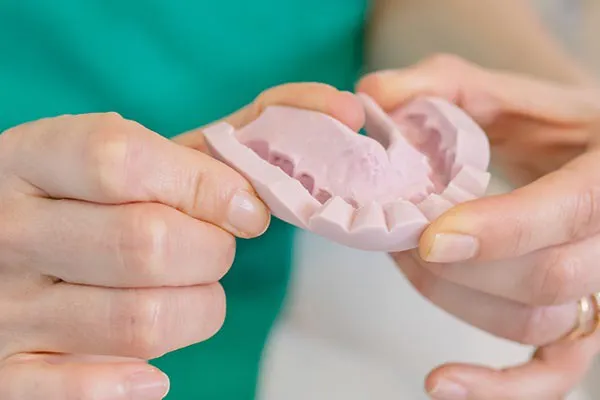
Our team will carry out all the necessary complementary examinations: imaging tests, intraoral photographs and 3D study models. Next, we will define a treatment plan, and we may even simulate our future dental procedure.
After planning, an individualized surgical guide is drawn up, which is essential for the doctor to define the exact location for the dental implants.
This makes the procedure simpler, more precise and faster. At the same time, the therapeutic regimen will be defined in advance so that the patient feels as comfortable as possible.
Clinical Case
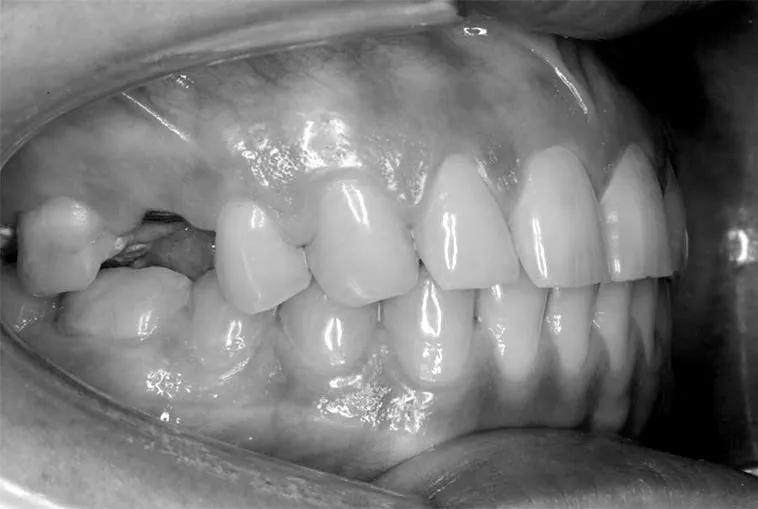
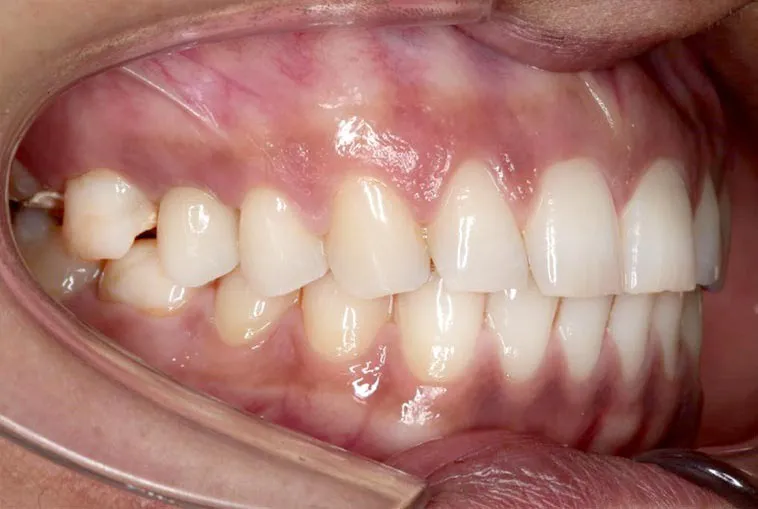
All-on-4 Treatment: Fixed Teeth in One Day
What is All-on-4?
All-on-4 is an advanced implantology technique that allows for the rehabilitation of a complete dental arch with only four dental implants, supporting a fixed prosthesis.
It is recognized as one of the most effective methods for those seeking fixed teeth in one day, quickly restoring aesthetics, chewing function, and comfort.


When is All-on-4 recommended?
All-on-4 is indicated for:
- Patients with total tooth loss in one or both dental arches.
- People with some remaining teeth, but with no possibility of recovery.
- Cases of advanced bone resorption, where traditional methods would require grafts.
- For those seeking a fixed and stable solution, avoiding removable prostheses.
- Adults whose bone structure is already mature.
What are the main advantages?
- Fixed teeth in a single day with immediate placement of the temporary prosthesis.
- Minimally invasive, using only four implants per arch.
- It avoids bone grafts in most cases.
- It reduces the total treatment time.
- Faster and more comfortable recovery.
- High success and satisfaction rates.
- Immediate improvement in aesthetics, speech, and chewing ability.
- A durable and stable solution thanks to digital planning and angled implant placement.

How do we plan for All-on-4?
1
Digital Assessment and Planning
2
Surgery and Implant Placement
3
Permanent Fixed
Prosthesis
4
Monitoring
and Maintenance
Book your appointment
Dr. Sancho Silvestre
A dentist with postgraduate training at the following institutions:
Frequently Asked Questions
Implants
What is a dental implant?
Dental implants are medical devices used to replace one or more natural teeth. We can compare a dental implant to the artificial root of a missing tooth.
After the osseointegration process, a crown can be placed on the implant to restore the function and shape of the missing tooth. When several teeth are missing, rehabilitation can involve the placement of several implants and the subsequent placement of bridges or prostheses on the implants.
Dental implants restore chewing function and a balanced smile to those who have lost one or more teeth. These treatments are very popular these days because they represent a convenient and very comfortable permanent solution for the patient.

Are implants safe?
Yes. The implants themselves are mostly made of titanium, a biocompatible material that is also used in other prosthetic procedures such as hip replacements.
Surgery to place implants involves a detailed assessment of your clinical condition and careful planning of the surgical procedure, using complementary diagnostic tests such as X-rays and/or CT scans.

What steps are involved in implant rehabilitation?
Rehabilitation with dental implants involves 3 stages:
- Diagnosis and treatment plan
- Surgical phase – during which the implants are placed
- Prosthetic phase – during which the crowns are placed.

What are the indications and contraindications for dental implants?
Dental implants are indicated for patients who have lost one or more teeth.
Some factors that may be responsible for lower success rates in terms of implant osseointegration include smoking habits, metabolic diseases such as diabetes and poor oral hygiene.
Diabetes is a risk factor for the success of dental implants, as healing is slower. Diabetic patients are also more likely to suffer from post-operative complications. However, if the disease is under control and the glycosylated hemoglobin values are within the reference parameters, there is no absolute contraindication.
Other systemic conditions: Osteoporosis, HIV, Hemophilia, Radiotherapy
Studies indicate that there is no contraindication to implant therapy, as long as the disease is compensated for and surgery is planned. We need to take extra precautions and we will communicate with specialists who follow you in the treatment of these systemic diseases before the surgery.

Do implants need maintenance?
Absolutely. Regular visits to your dentist and proper oral hygiene are key to the long-term success of implants.
There is a widespread idea that because the implant is an artificial structure, it doesn’t need oral hygiene care like natural teeth. This idea couldn’t be more wrong.
The implant is a device that is surrounded by bone and gum. Bacterial plaque forms on both teeth and implants. These bacteria compromise the health of the gums and, in some cases, the bone, which will affect the implant, since these tissues are its support.
Correct oral hygiene and regular check-ups are therefore essential for maintaining implants.

What are gum grafts?
A gingival graft is a microsurgical procedure in which free gum or connective tissue (the inner part of the gum) is transplanted to cover a gum tissue defect.
This procedure is usually done to increase the amount of tissue around implants, or to cover defects in natural teeth caused by periodontal disease or trauma.
All-on-4
What is "All-on-four"?
This is the protocol we like to use for patients who have little bone and want to place fixed teeth on the same day.
- Fast treatment that increases quality of life
- Shorter treatment time
- Stable even with low bone volume
Treatment with All On 4 is a scientifically proven protocol with studies showing a 10-year follow up in the mandible and a 5-year follow up in the maxilla with survival rates of between 96-98%, with stabilization of marginal bone loss and healthy gingival tissues.
Is All-on-4 treatment painful?
No. The surgery is performed under anesthesia, and postoperative discomfort is generally minimal.
Will I lose teeth during the process?
No. On the same day as the surgery, a temporary fixed prosthesis is placed, which will later be replaced by a permanent fixed prosthesis.
How long does the entire treatment take?
The surgery and placement of the temporary prosthesis are performed on the same day.
The permanent prosthesis is placed after the implants have integrated, usually within 3 to 6 months.
How long do implants last?
With proper care and regular follow-up, implants can last for decades.